The Gymscore training library · Form
Bench Press Form Mistakes: A Complete Guide to a Stable Press
Build a stable bench setup, decide which part of the rep to review, and carry one clear adjustment into your next session.
Bench press review priorities: category results and detected faults
Compare the options below. Scroll the table sideways on smaller screens.
| Review focus | Measure reported | Observed frequency | Score difference vs baseline |
|---|---|---|---|
| Foot placement | Lowest-scoring category | 42.6% | Not reported |
| Excessive arch | Detected fault | 5% | 26 points lower |
| Range of motion | Lowest-scoring category | 20.9% | Not reported |
| Upper-body setup | Posture as limiting category | 18.5% | Not reported for a specific setup error |
In the 10,000-analysis Gymscore study, published August 22, 2026, foot placement limited 42.6% of 541 bench press analyses from 201 users. Score differences are observed associations, not injury-risk estimates. Sources and context ↓
Quick picks
- Feet move during the press → settle your base before unracking.
- Hips lift when you drive with the legs → review the direction of pressure and reduce the load for practice.
- Reps finish at different depths → choose a controlled range and make each rep comparable.
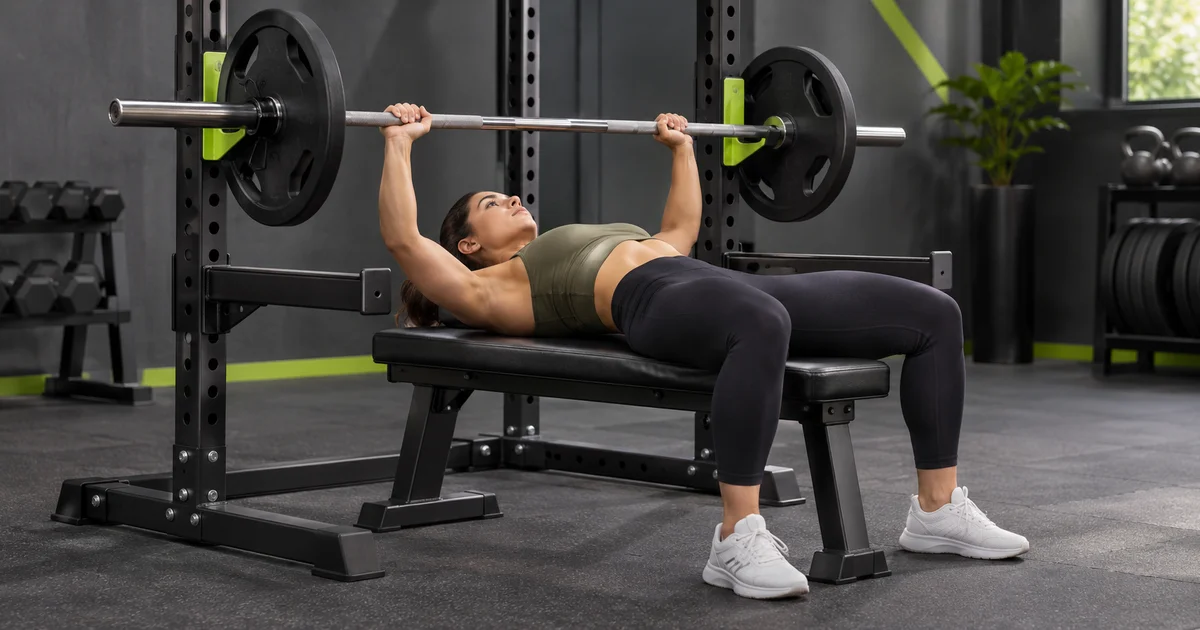
Four bench press checks, from setup to lockout
Feet limited 42.6% of analyses
Moving or unstable feet
Your feet help make the rest of the setup repeatable. Sliding, tapping or resetting them during the press can change how you stay on the bench, even if the bar still reaches the top.
- When to use this
- Review your feet before your arms if the setup changes between reps or you shift as the bar leaves the rack.
- Your next step
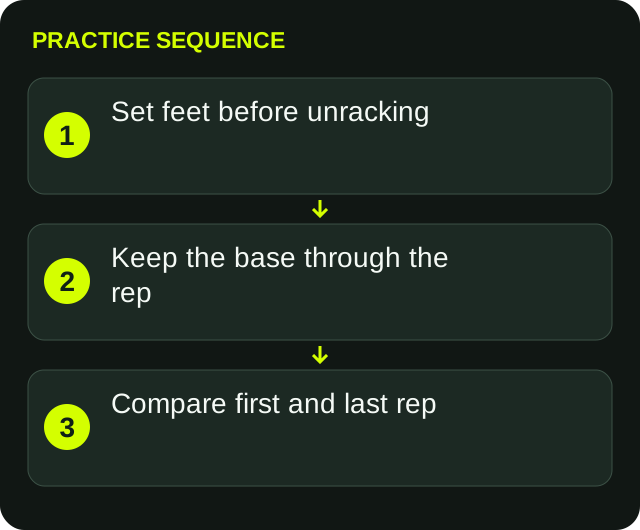
- Set the feet before unracking and establish a position you can maintain through the set.
- Put it into practice
- Use a light load for setup repetitions, briefly checking foot contact before each controlled press.
- Common mistake
- Do not wait until the bar is over your chest to search for a stable foot position.
- What to log next
- Log stance and whether the feet stay still at the same load; use the same filming angle.
Observed score difference: −26 points
An arch you cannot maintain comfortably
The app detected excessive arching in 5% of bench analyses. This does not make every arch a mistake: a deliberate, controlled arch is part of many bench techniques. Focus on a position you can reproduce.
- When to use this
- Review a change in your arch or hip contact when the bar gets heavy, rather than judging the setup from one still image.
- Your next step
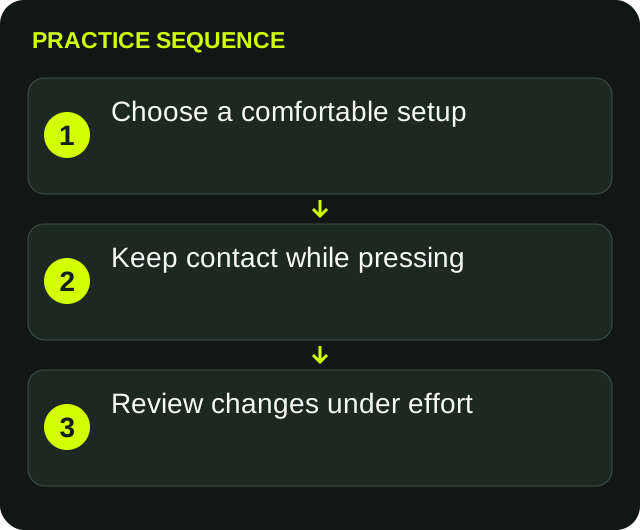
- Choose a comfortable setup and maintain contact with the bench as you press.
- Put it into practice
- Practise with a light load, keeping your base steady rather than increasing the arch during the rep.
- Common mistake
- Do not imitate an extreme competition setup without the experience to control it, or force a painful position for a shorter range.
- What to log next
- Record the setup and any mid-set change; discomfort is a reason to adjust, not a score target.
Range limited 20.9% of analyses
Changing the range between reps
A set becomes difficult to compare when later repetitions stop short, bounce or use a different bottom position. A consistent range helps you tell whether strength changed or the movement changed.
- When to use this
- Check the first and last repetitions from a clear side view, especially near the end of challenging sets.
- Your next step
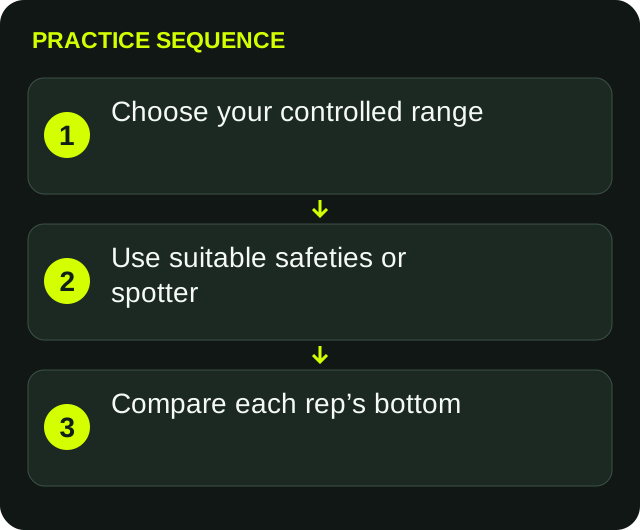
- Choose a controlled range appropriate to your goal and maintain it without bouncing the bar.
- Put it into practice
- Use a light load and a deliberate bottom position. Set suitable rack safeties or arrange a capable spotter before barbell practice.
- Common mistake
- Do not count a shorter, uncontrolled repetition as the same performance simply because the weight is heavier.
- What to log next
- Log the variation and range alongside sets and reps so progression is based on comparable work.
Posture limited 18.5% of analyses
Losing the upper-body setup
An inconsistent grip, unrack or upper-back position changes where a press begins. The posture statistic is a category result; the study does not assign 18.5% to one particular shoulder or elbow mistake.
- When to use this
- Review a setup that feels stable before unracking but changes as the bar comes out or when fatigue builds.
- Your next step
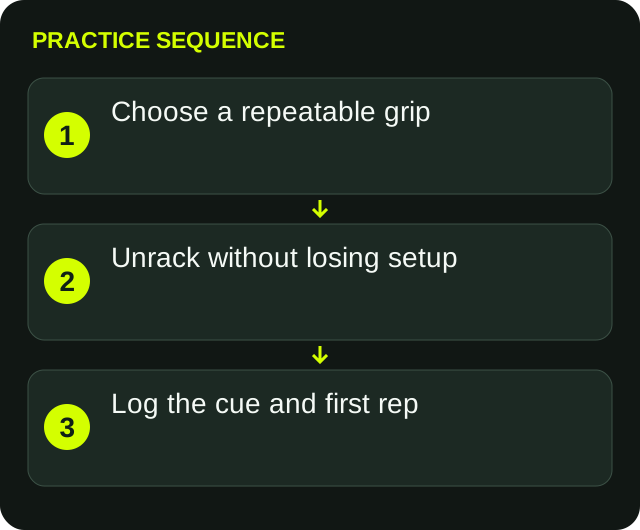
- Choose a grip and upper-back position you can hold, then unrack without reaching so far that you lose the setup.
- Put it into practice
- Practise the unrack with a light bar and correctly positioned hooks. Re-rack and reset if the setup changes before the first rep.
- Common mistake
- Avoid changing grip width, elbow position and foot placement at the same time; that makes the result difficult to interpret.
- What to log next
- Note the cue and whether the first repetition starts from the intended position, then compare later repetitions.
How to review a bench press set
- Prepare the station
Set suitable safeties or use a capable spotter. Check the bench, hooks and intended load before starting.
- Record the whole setup
Film from the side with feet, hips, torso and bar visible. Include the unrack and re-rack, not just the middle repetitions.
- Review the base before the press
Check foot movement and bench contact, then compare range and bar control across the set.
- Retest one adjustment
Choose one setup cue, practise it with a manageable load and log whether the intended pattern became more consistent.
Use the result to plan the next bench session
Track load, sets, repetitions, effort and rest along with one setup note. If a cue helps, keep it for the next comparable session instead of collecting a new cue every time you train.
A rep PR is meaningful only in context. Record the same exercise variation and range so a shorter press is not mistaken for a strength gain. Follow a plan with a clear progression rule and use increments you can control.
When training alone, arrange an appropriate safety setup rather than relying on a camera or form score. Do not force a position that hurts. Persistent or worsening symptoms call for qualified assessment, and this chart cannot identify their cause.
Questions answered
What was the most common bench press limiter?
Foot placement was the lowest-scoring category in 42.6% of 541 bench press analyses from 201 users. This does not mean every lifter needs the same stance or leg-drive cue.
Is arching during the bench press always wrong?
No. The study’s excessive-arch finding refers to the app’s scoring criteria, not every deliberate arch. Choose a controlled setup appropriate to your goal and do not force a painful position.
Should my feet be flat on the floor?
A supported, stable foot position is a useful starting point. Competition rules vary, so check your federation’s current requirements if you compete. Keep your chosen setup consistent while reviewing it.
Can I bench alone while filming?
A recording is not a spotter or a safety system. Use appropriate rack safeties and a load you can manage, or arrange a capable spotter. Set up the phone before you handle the bar.
Is a Smith machine automatically easier to use well?
No. A fixed bar path still requires an appropriate bench position, grip, range and safety-stop setup. Our separate Smith machine guide covers those checks without treating the machine as a substitute for preparation.
Sources and context
Category percentages indicate which score was lowest in an analysis; they are not prevalence estimates for every specific mistake discussed here. The excessive-arch result uses the app’s criteria and is an association with score, not injury risk. The study does not establish a collection date range.
Published by the team behind Gymscore. Our editorial methodology explains how we use sources and update our guides.