Best Lifting Apps in 2026 – Strength Training Evolved
Read this article in Deutsch, Español, Français, Italiano, Nederlands, Polski, Português, Svenska.
The gym logging app landscape looks remarkably different in 2026. Smart auto-regulation, wearable-powered fatigue tracking, and AI form analysis have transformed simple workout trackers into intelligent training partners. Whether you're chasing powerlifting PRs, optimizing for hypertrophy, or just want consistent progress, the right app makes all the difference.
We've spent months testing these apps in real training environments—from commercial gyms to home setups. Our picks balance usability with advanced features, covering everything from minimalist logbooks to full-featured AI coaches. Here's what's actually worth your time (and money) in 2026.
Strong
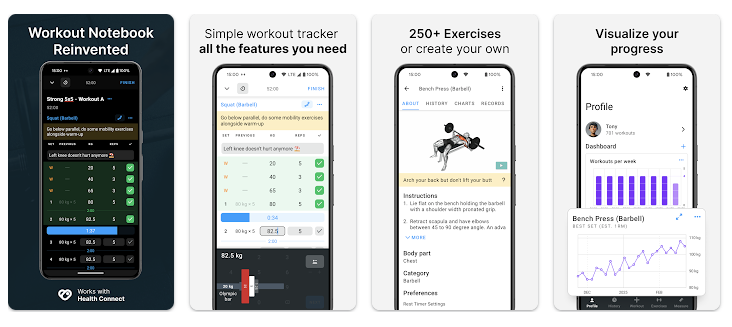
Strong remains a popular, no-frills gym logbook that lets lifters easily record workouts and monitor progress. It has a clean interface with an exercise library of 200+ movements and focuses on detailed tracking rather than guided training. The free version is feature-rich, and a Pro upgrade (~$4.99/month) unlocks unlimited routine saves and body measurement tracking.
Key Features:
- • Simple, clean interface designed for quick logging
- • 200+ exercise library with custom exercise creation
- • Personal record tracking and highlighting
- • Apple Watch integration for gym convenience
- • Up to 3 routine templates on free version
Pricing:
Free version with core features • Pro: $4.99/month for unlimited routines and body measurements
Gymscore
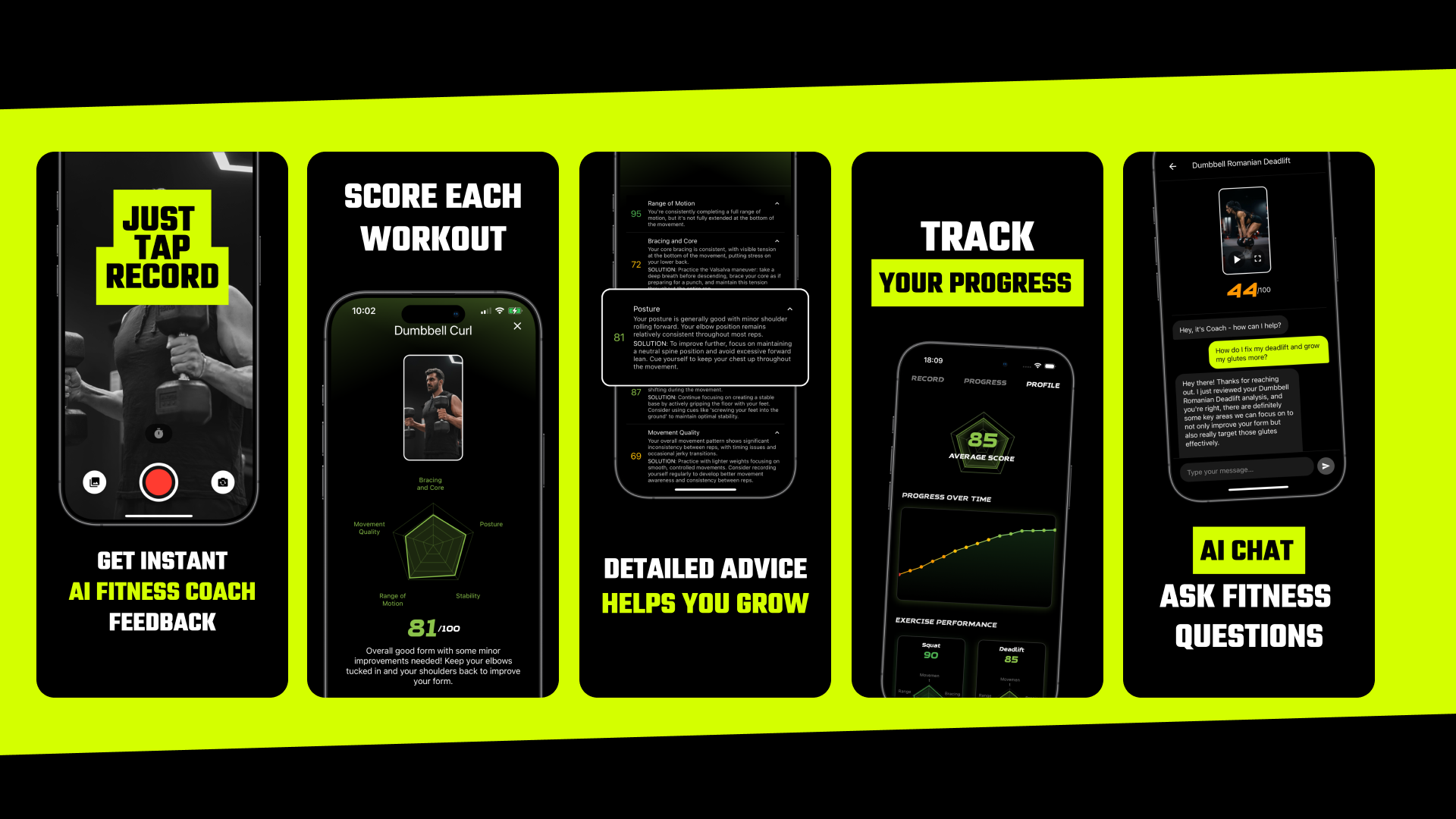
Gymscore is more than a lifting log: it combines personalized programming, fast workout tracking, an action-oriented AI coach, and form analysis in one training system. Its AI can build a multi-week workout plan around your goals, schedule, experience, and available equipment, while ready-made templates make it easy to start proven programs immediately. Log sets, reps, and weight, review workout history, progress, and personal records, or ask the Advanced Coach to track completed work for you and give advice. Video analysis adds a 0–100 technique score, so strength progress and movement quality stay connected.
Key Features:
- • Personalized AI workout plans and multi-week programs
- • Ready-to-use program templates plus flexible plan customization
- • Set, rep, and weight logging with workout history, progress, and personal records
- • Advanced Coach that can track workouts for you or give training advice
- • AI form analysis with objective 0–100 technique scoring
Pricing:
Subscription-based with various tiers for AI form analysis
Hevy
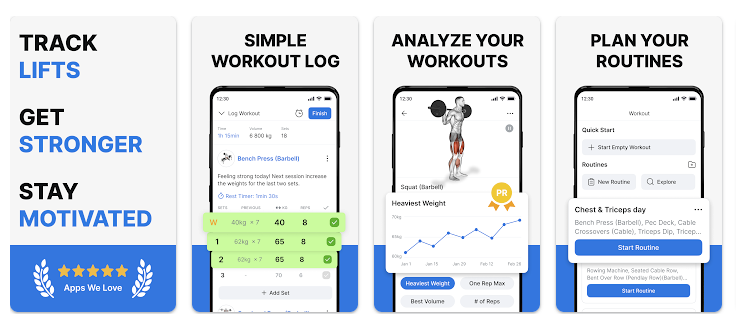
Hevy has solidified its position as a favorite among lifters for its modern design and generous free tier. It offers everything Strong does – workout logging, custom routine templates, rest timers – but with a slicker UI and active development. The Premium upgrade (~$39/year) unlocks advanced analytics and unlimited everything.
Key Features:
- • Modern, polished interface with regular updates
- • Generous free tier with multiple routine templates
- • Advanced analytics and progress charts
- • Social features (optional) for sharing workouts
- • Excellent wearable device integration
Pricing:
Extensive free version • Premium: $39/year for advanced analytics and unlimited features
Jefit
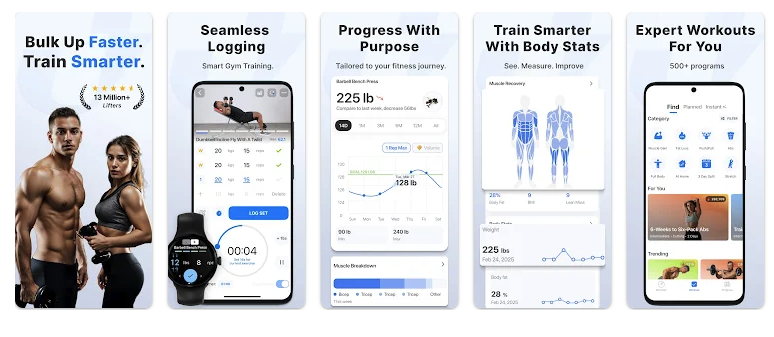
Jefit remains a staple in gym tracking and one of the most comprehensive lifting planners. Its strength lies in an enormous exercise library (1,400+ exercises) each with video demos. The free version includes basic tracking (with ads), while the Elite plan (~$12.99/month) removes ads and adds advanced features.
Key Features:
- • Massive 1,400+ exercise library with video demonstrations
- • Community-generated workout programs
- • Detailed progress analytics and body measurements
- • Social features and workout sharing
- • Support for both bodybuilding and powerlifting styles
Pricing:
Free version with ads • Elite: $12.99/month for premium features and ad-free experience
Fitbod
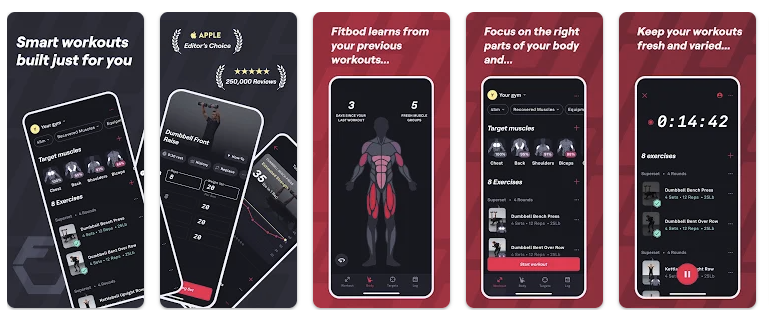
Fitbod remains an intelligent workout planner that uses AI algorithms to generate strength training routines tailored to you. In 2026, its machine learning capabilities have become even more refined. You input your fitness level, goals, and available equipment, and Fitbod suggests a workout each day – adjusting sets, reps, and exercises based on your logged performance and muscle recovery state. Fitbod is free to download but largely requires a subscription (about $12–$15/month) after a limited number of workouts.
Key Features:
- • AI-powered workout generation based on your progress
- • Automatic progressive overload and recovery tracking
- • Adapts to available gym equipment
- • Large exercise database with form videos
- • Muscle recovery optimization between sessions
Pricing:
Limited free trial • Premium: $12-15/month for full AI workout generation
Alpha Progression
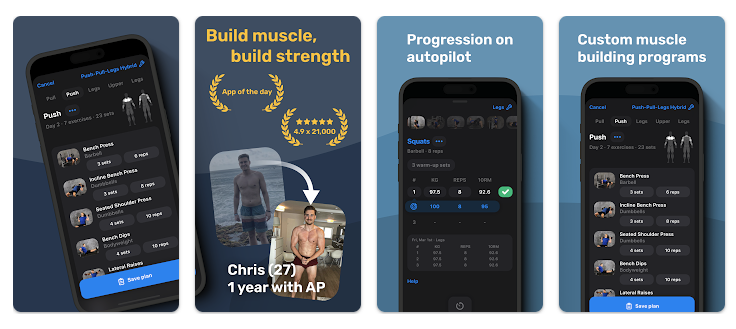
Alpha Progression has grown from an up-and-coming app to a global favorite for its hypertrophy-focused training plans and progression guidance. It uses smart algorithms to nudge you toward muscle and strength gains. It incorporates advanced concepts like Reps in Reserve (RIR) tracking and planned deload weeks. The base app is free, while the Pro version (~$10/month or ~$64/year) unlocks the AI plan generator and advanced analytics.
Key Features:
- • Hypertrophy-focused training with smart progression
- • Reps in Reserve (RIR) tracking for advanced lifters
- • Automatic deload week planning
- • High-quality exercise video library
- • 4.9★ rating with evidence-based programming
Pricing:
Good free version for basic logging • Pro: $10/month or $64/year for AI planning
Which Lifting App Should You Choose?
Quick Recommendations:
- Best Overall: Gymscore - AI workout plans, templates, tracking, advanced coaching, and form analysis in one app
- For Exercise Variety: Jefit - massive exercise library with video demonstrations
- For AI Programming: Fitbod - takes the guesswork out of workout planning
- For Serious Lifters: Alpha Progression - advanced features like RIR tracking and periodization
- For Simplicity: Strong - clean, no-nonsense logging that just works
- For Beginners: Gymscore - guided programs, workout tracking, and technique feedback from day one
The best lifting app depends on your experience level, training style, and whether you prefer manual logging or AI-guided programming. Most apps offer free versions or trials, so try a few to see which interface and features work best for your gym routine.