Smith Machine Bench Press Form: How to Set Up (and Why It Scores So Low)
Read this article in Deutsch, Español, Français, Italiano, Nederlands, Polski, Português, Svenska.
How to set up a Smith machine bench press: bench position, where the bar touches, which way to face, and the mistakes that made it our lowest-scoring lift.
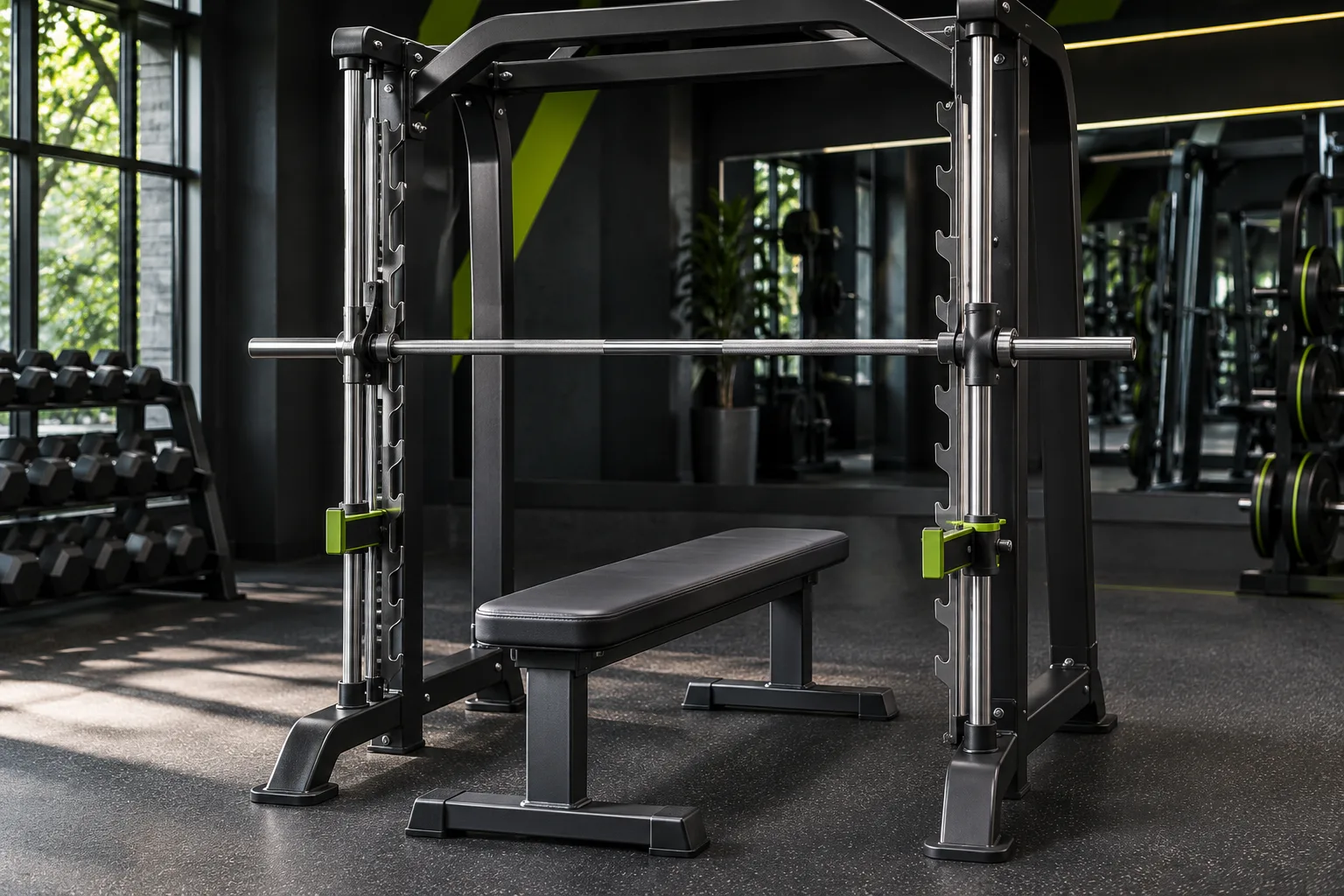
Published by the team that makes Gymscore. These observational app scores describe submitted videos, not injury risk or clinical outcomes. Repeat sets are not independent participants; exercise groups differ, and score changes do not prove cause or guarantee progress. See the original analysis and our editorial methodology. Cover image is AI-generated for illustration.
TL;DR
- Good Smith machine bench press form starts before you touch the bar: set the bench so the bar comes down to your lower chest, around or just below nipple line. On an angled machine, face so the bar moves back toward your head as you press.
- Then bench like you would with a barbell: shoulder blades back and down, feet planted, elbows at a moderate angle, full range.
- In Gymscore's analysis of nearly 10,000 filmed lifts, the Smith machine bench press had the lowest average score of any exercise: 35.9 out of 100. That's from only 17 analyses, so treat it as a warning sign rather than a verdict.
- The likely reason: people trust the machine to handle their form. It guides the bar, not your body.
- The Smith machine is a fine tool. Setup is everything.
What the data says
The analysis compared technique categories including postural alignment, foot placement, range of motion and overall movement quality. The current app also gives feedback on bracing.
Ranked by average score, the Smith machine bench press came last:
| Exercise | Average score | Analyses |
|---|---|---|
| Smith machine bench press | 35.9 | 17 |
| Pull-up | 36.1 | 63 |
| Chair dips | 36.9 | 24 |
| Dumbbell bicep curl | 37.7 | 39 |
| Push-up | 40.6 | 164 |
Seventeen analyses is a small sample, so the exact number could move. But the pattern fits what we see across the bench press generally. In 541 bench press analyses across the exercise family, the weakest part of the lift was foot placement 42.6% of the time, ahead of everything else. The base gets ignored on the bench, and a machine that "holds the bar for you" makes that easier to do.
For context, barbell bench averaged 49.2 and dumbbell bench 56.2.
Why the Smith machine bench scores so low
The dataset does not establish why the Smith scores were low. The following are setup issues worth checking. The guided bar removes one problem: balancing the weight. It doesn't remove any of the others, and it adds one of its own.
- The bench is in the wrong spot. With a free barbell, you can adjust where the bar comes down. On a Smith machine, the rails decide. If your bench is a few centimetres off, every rep touches your neck, upper chest or stomach.
- The setup gets skipped. People lie down, unhook the bar and press, without setting their shoulder blades or feet.
- The fixed path doesn't match yours. A barbell bench usually moves in a slight curve. A Smith bar goes straight up and down, or on a fixed angle. You have to set up so that path suits you.
- Range gets cut short. Because it feels safe, people bounce off the safeties or stop a few centimetres above the chest.
How to set up a Smith machine bench press
1. Position the bench first
Lie on the bench with an empty bar and lower it slowly. It should land on your lower chest, around or just below your nipples, with your forearms close to vertical. If the path is near your neck or stomach, re-rack the unloaded bar, reposition the bench and recheck before loading. Follow the instructions for your specific machine. REP Fitness's Smith machine bench guide gives the same mid-to-lower-chest target.
2. Which way to face on an angled Smith machine
Many Smith machines have rails set at a slight angle. Set the bench so the bar travels back toward your head as you press up and toward your lower chest as you lower it. That's closer to how a barbell bench usually moves. REP's guide recommends the same direction. Test it with an empty bar before you load it.
3. Set the safeties
Follow the machine instructions and test the stops with an unloaded bar. They must catch the bar before it can pin your chest or neck, including if you lose your arch. If you cannot achieve both a controlled range and reliable clearance, change the setup or exercise and get qualified help.
4. Set the bar height
The hooks should be low enough that you can unhook the bar with your arms nearly straight, without losing your shoulder position.
5. Then bench like a barbell bench
- Grip slightly wider than shoulder width.
- Shoulder blades back and down into the bench.
- Feet planted, set before you unhook, and still for the whole set.
- Elbows at a moderate angle, not flared straight out to the sides.
- Wrists stacked over your elbows, bar low in your palm.
- Full range: touch your chest under control, press to straight arms.
Smith machine bench press checklist
- Empty bar: check where it lands and adjust the bench.
- On an angled machine, check the bar moves toward your head as you press.
- Test the safeties unloaded so the bar cannot pin your chest or neck if you lose your position.
- Lie down, eyes roughly under the bar.
- Grip, shoulder blades back and down.
- Plant your feet, push through midfoot and heels, glutes on the bench.
- Breathe, brace, unhook by rotating the bar.
- Lower to your lower chest, press to straight arms.
- Rotate to rehook at the top. Don't let the bar drop onto the safeties.
Common mistakes
- Not checking bench position with an empty bar.
- Facing the wrong way on an angled machine, so the bar drifts toward your stomach as you press.
- Skipping the setup: loose shoulders, feet moving.
- Elbows flared to 90 degrees.
- Half reps or bouncing off the safeties.
- Butt lifting off the bench when you push with your legs.
- Assuming the machine makes form irrelevant. It guides the bar, not your body.
Drills to clean up your Smith machine bench
1. Empty-bar setup run
Every session, do one set of 5 with an empty bar just to confirm bench position and bar path. It takes a minute and fixes the most common problem.
2. Paused reps
Pause for 1 to 2 seconds on your chest. If you can't hold it without losing your shoulder position, lighten the weight.
3. Feet-first setup
Set your feet before you unhook the bar, and don't let them move. The same idea is covered in detail in bench press foot placement.
Smith machine bench press vs barbell bench press
Neither is "better" for everyone.
- The Smith machine guides the bar and offers multiple racking positions. Correctly set and tested safeties remain essential; the machine does not eliminate the risks of a failed rep.
- The barbell trains you to stabilise the bar yourself and is what you'll use if you ever compete.
The research is reassuring for general training. An 8-week study in the International Journal of Sports Physiology and Performance (Marcos-Frutos et al., 2025) had 37 sport-science students train back squat and bench press either with free weights or on a Smith machine. Both groups improved, chest and thigh muscle growth was comparable, and strength gains were bigger when the testing matched how people had trained. The authors concluded the general population can choose based on personal preference.
So pick the one you'll use well. Just set it up properly.
Is the Smith machine bench press good?
Yes, as long as the bench is positioned right and you don't skip the setup. It can be useful for higher-rep chest work and practising a stable setup, with correctly set safeties and a load you can control. If your shoulders bother you on it, check your bench position and elbow angle first, and see our post on bench press shoulder pain. For pain that persists, see a qualified professional such as a doctor or physiotherapist.
How to film your Smith machine bench
- Side-on at bench height, with the bar, chest, hips and feet in frame. This shows where the bar touches, elbow angle, range and whether your butt or feet move.
- Film the setup as well as the reps.
- Pause at the bottom of the first rep. Is the bar on your lower chest?
- Check your feet on a second playback.
To get a score, film your bench in Gymscore. You get a 0-100 form score with sub-scores for postural alignment, bracing, foot placement, range of motion and overall movement quality, plus tips on what to fix. The bench press form checker page covers what to keep in frame. Bench scores improved about 2.46 points per repeat attempt in our data, an observational result rather than proof that filming caused the improvement.
For more on why the "easy" exercises score low, see pull-up and push-up form mistakes, and for the full rankings, our analysis of nearly 10,000 filmed lifts. If your bench is stuck, see how to increase your bench press.
Next time you use the Smith machine, check bench position with an empty bar, film one set side-on, and score it in Gymscore.
FAQ
Where should the bar touch on a Smith machine bench press?
On your lower chest, around or just below nipple line, with your forearms close to vertical. Check it with an empty bar before loading and slide the bench toward your feet or head until the bar lands there.
Which way should you face on an angled Smith machine for bench press?
Set the bench so the bar moves back toward your head as you press up and toward your lower chest as you lower it. That's closer to the slight curve a barbell bench usually follows. Test the direction with an empty bar first.
Is the Smith machine bench press good?
Yes, when it's set up properly. It lets you bench without a spotter and push hard without balancing the bar. An 8-week study found free-weight and Smith machine bench training produced comparable chest growth, and the authors said most people can choose based on preference.
Is the Smith machine bench press easier than a barbell bench?
It removes the need to balance the bar, so it can feel easier. It doesn't fix the rest of your form. In Gymscore's analysis of nearly 10,000 filmed lifts, the Smith machine bench had the lowest average score of any exercise, 35.9, from 17 analyses.
What are the most common Smith machine bench press mistakes?
Not checking where the bar lands, facing the wrong way on an angled machine, skipping the shoulder blade and foot setup, flaring the elbows to 90 degrees, and cutting the range short. Most of these are fixed by a quick empty-bar setup before your first set.
Should beginners use the Smith machine for bench press?
It can be a reasonable option when you understand the machine and have tested its safety stops. Spend the first sessions on setup: bench position, shoulder blades, feet and full range. A barbell or dumbbell bench is worth learning too; in Gymscore's data, dumbbell bench averaged 56.2 and barbell bench 49.2.