Bench Press Foot Placement: Why Your Feet Are the #1 Thing Holding Back Your Bench
Read this article in Deutsch, Español, Français, Italiano, Nederlands, Polski, Português, Svenska.
Foot placement was the weakest part of 42.6% of 541 bench presses we scored. How to set your feet, use leg drive, and arch without losing your setup.
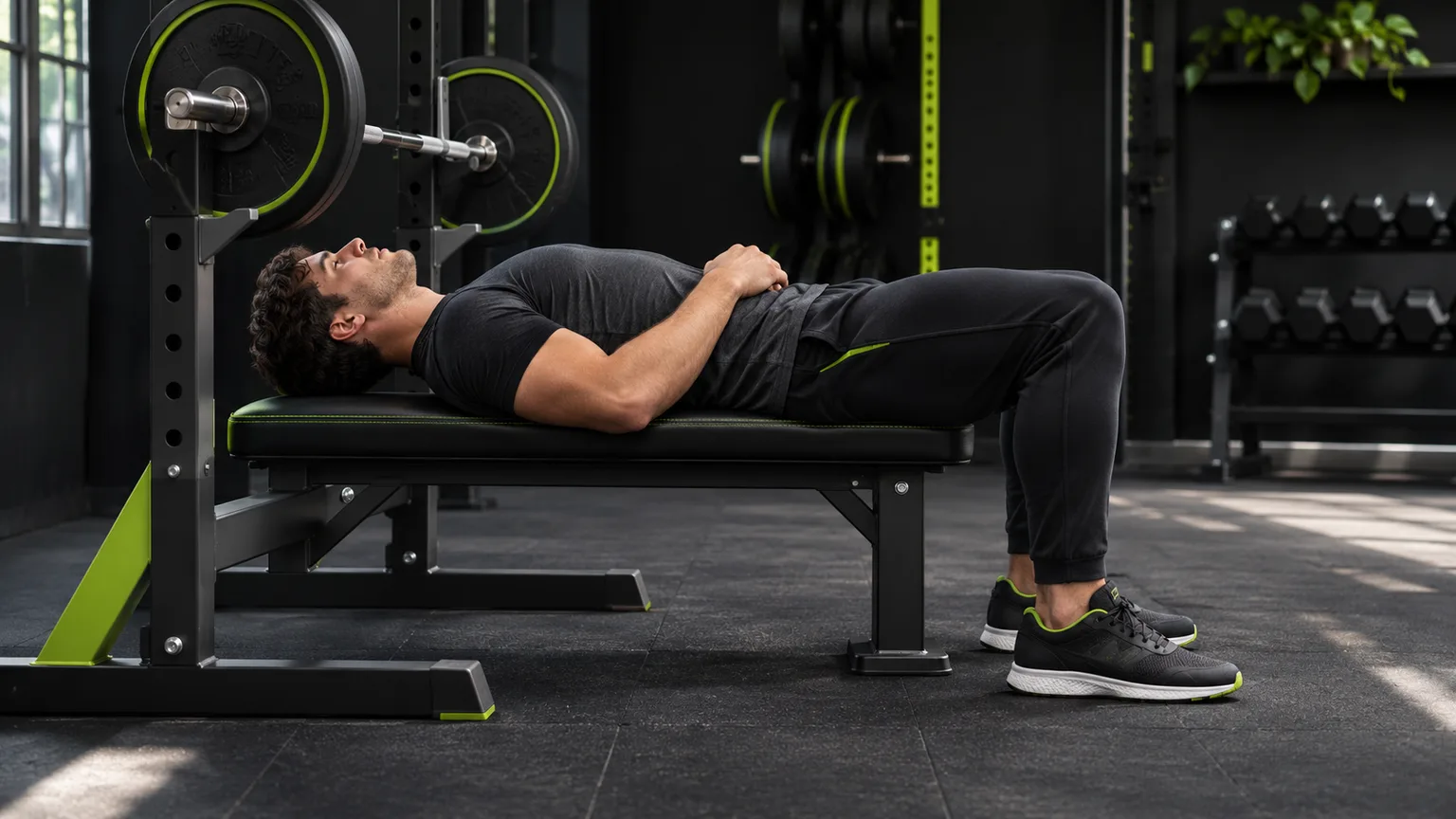
Published by the team that makes Gymscore. These observational app scores describe submitted videos, not injury risk or clinical outcomes. Repeat sets are not independent participants; exercise groups differ, and score changes do not prove cause or guarantee progress. See the original analysis and our editorial methodology. Cover image is AI-generated for illustration.
TL;DR
- In 541 bench press analyses from 201 Gymscore users, foot placement was the weakest part of the lift 42.6% of the time, more than twice as often as anything else.
- On the deadlift, foot placement was the weakest link in only 4.7% of lifts. People set their feet fine when the feet obviously matter.
- Good bench press foot placement: feet planted (flat if your federation requires it), set before you unrack, pressure through midfoot and heels, no movement during the set.
- Leg drive should push you back toward the rack, not lift your butt off the bench.
- A moderate arch is normal. Excessive arching appeared in only 5.0% of benches but was linked to scores 26.0 points lower, the biggest single-fault gap in our data.
What the data says
The analysis compared technique categories including postural alignment, foot placement, range of motion and overall movement quality. The lowest-scoring category within each analysis was called the "limiting factor."
Across 541 bench press analyses from 201 users (average score 51.8 out of 100):
| Limiting factor | Share of benches | Average sub-score |
|---|---|---|
| Foot placement | 42.6% | 50.9 |
| Range of motion | 20.9% | 55.6 |
| Postural alignment | 18.5% | 52.4 |
| Overall movement quality | 18.0% | 48.5 |
Compare the deadlift: across 1,339 analyses, foot placement was the limiting factor in only 4.7% of lifts and averaged 82.4. Lifters can clearly place their feet. They just stop paying attention when the lift looks like an upper-body movement.
On the bench, people watch the bar, their elbows and their chest. Almost nobody's limiting factor is the part they're watching. The points are lost in the base: the feet, leg drive, and staying stable on the bench.
Repeat bench submissions showed an encouraging association with higher scores. Within users, bench scores rose an average of 2.46 points per repeat attempt, one of the faster-improving lifts we measured.
Why your feet matter in an "upper-body" lift
Your feet are your only contact with the floor. Pushing into it keeps you tight from legs to upper back, keeps your hips and arch in the same place every rep, and gives you leg drive. If your feet slide, everything above them shifts, including your bar path.
What correct bench press foot placement looks like
Feet flat or on toes?
If you compete, your federation decides. The IPF Technical Rulebook (effective 1 March 2026) requires feet to stay flat to the extent permitted by the shoe shape; repositioning is allowed only while they remain flat. Lifting the feet is a cause for disqualification. Other federations set their own rules, so check yours.
Outside competition, either can work:
- Feet flat is the easiest starting point: a big, stable base and easy pressure through the heels.
- Heels up lets some lifters tuck their feet further back and arch more, but it's less stable and makes it easy to push the hips up instead of back.
If you're unsure, start flat.
Feet back or forward?
- Slightly behind the knees (knees bent a little past 90 degrees) works for most people and lets you push back toward your head.
- Far out in front, with legs nearly straight, gives you little leg drive and often makes the hips lift.
- Tucked far back usually means heels up and a big arch. Some experienced lifters use it; it's harder to control.
Width and pressure
Go wide enough to feel stable side to side, usually a bit wider than hip width, knees tracking roughly over the toes. If you wobble on the unrack, go wider. Feel the pressure through your midfoot and heels. Once your feet are set, they don't move until the set is done: no sliding, tapping or resetting between reps.
Leg drive on the bench press, without lifting your butt
Most leg drive mistakes come from pushing in the wrong direction.
- Push back, not up. Think about sliding your body up the bench toward the rack. Glutes stay down.
- Drive into the floor before the bar leaves your chest, so you don't lose tension at the bottom.
- Keep glute contact. If your butt comes up, you're pushing up. That fails a lift in most federations and changes your arch and bar path in the gym.
A useful cue: "spread the floor and push the bench away."
Foot position, bench press arch and lower back discomfort
Foot position drives your arch. Pulling the feet back and pushing the hips toward the shoulders increases it; moving the feet forward reduces it.
A moderate arch is a normal, legitimate part of bench technique: it keeps your shoulder blades pinned and your chest up. Excessive arching is different, and in our data it was rare but expensive: 5.0% of benches, with scores 26.0 points lower on average, the largest gap for any single fault in the whole dataset.
Some lifters also feel lower back discomfort when they arch hard, especially when the arch comes mostly from the lower back. Common adjustments:
- Build the arch from your upper back and chest (shoulder blades back and down, chest up), not by cranking your lower back.
- Bring your feet slightly forward.
- Keep your glutes down and push back, not up.
If you have pain on the bench or pain that lingers after training, see a qualified professional such as a doctor or physiotherapist.
Bench press setup checklist
- Lie down with your eyes roughly under the bar.
- Take your grip.
- Pull your shoulder blades back and down into the bench.
- Plant your feet: flat if required, slightly behind the knees, a bit wider than hips.
- Push through midfoot and heels until legs and glutes are tight. Glutes on the bench.
- Breathe and brace.
- Unrack. If your feet or hips moved, rack it and reset.
- Keep your feet still for the whole set, driving into the floor as you press.
Common mistakes
- Setting the feet after the unrack, when you can no longer get properly tight.
- Feet too far forward, so there's no useful leg drive.
- Dancing feet that move between reps.
- Heels up without control, so the butt comes up.
- Pushing up instead of back, so the arch grows mid-rep.
- A narrow, wobbly stance.
- Copying an extreme arch before you can control a moderate one.
Drills to fix your foot placement
1. Paused setup reps
With a light weight, run the full checklist and hold the unrack for 3 to 5 seconds before each rep. If your feet move during the hold, reset.
2. Leg drive slide drill
With an empty bar or none, set up and push through your feet until you feel your body try to slide toward the rack, glutes still down. Do a few 5-second pushes before your working sets.
3. Dumbbell bench as a setup check
Dumbbells still demand a planted base. In our data, dumbbell bench averaged 56.2 against 49.2 for barbell bench, a 7.0-point gap. That's an association, not proof that switching helps everyone, but it's a good variation for practising a still setup.
How to check your bench setup on video
You can't see your feet while you bench. A phone can.
- Side-on at bench height: the main angle. Keep feet, hips, torso and bar in frame. It shows foot position, glute contact, arch and bar path.
- 45 degrees from the foot end: shows foot width, knee direction, and whether a foot slides or rotates.
- Film the whole set, including setup. Foot problems often start before the first rep or creep in late.
- Watch only the feet on the first playback. Did they move? Did your heels lift? Then check the hips.
To get a score instead of guessing, film your bench in Gymscore. You get a 0-100 form score with sub-scores for postural alignment, bracing, foot placement, range of motion and overall movement quality, plus tips on what to fix. The bench press form checker page covers what to keep in frame.
For squats, deadlifts and more, see our analysis of nearly 10,000 form checks.
Next time you bench, set your feet before you touch the bar, film one set side-on, and score your setup in Gymscore. Fix one thing, then film again.
FAQ
Where should your feet be on the bench press?
For most lifters, feet should be planted on the floor slightly behind the knees, a bit wider than hip width, with pressure through the midfoot and heels. Set them before you unrack the bar and keep them still for the whole set.
Should your feet be flat or on your toes when you bench press?
In IPF powerlifting, the feet must be flat on the floor, as flat as the shoe allows. Outside competition either can work, but feet flat is the easier, more stable starting point. Heels up allows more arch but makes it harder to keep your glutes on the bench.
How do you use leg drive on the bench press without lifting your butt?
Push through your feet horizontally, as if sliding your body toward the rack, rather than pushing your hips up. Your glutes should stay on the bench the whole time. If they lift, you are pushing up instead of back.
Is arching on the bench press bad?
A moderate arch is a normal part of bench technique; excessive arching is the problem. In Gymscore's data, excessive arching appeared in only 5.0% of bench presses, but those lifts scored 26.0 points lower on average, the largest gap for any single fault.
Why does my lower back hurt when I bench press?
Back pain can have several causes, which a form score or video alone cannot diagnose. Stop or modify a painful movement rather than forcing a larger arch. Persistent or worsening pain should be assessed by a qualified doctor or physiotherapist.
What is the most common bench press form mistake?
In 541 bench press analyses from 201 Gymscore users, foot placement was the weakest part of the lift 42.6% of the time, more than twice as often as range of motion (20.9%). The base, not the press itself, is where most bench lifters lose points.