The Gymscore training library · Progression
How to Choose a Progression Model for Your Next Training Block
Choose a progression rule you can follow, know when to hold the load, and turn your workout log into a clear next-session decision.
Four ways to decide what changes next session
Compare the options below. Scroll the table sideways on smaller screens.
| Model | What changes | Useful when | What to record |
|---|---|---|---|
| Linear progression | Load after a successful session | The same rep target remains repeatable | Load, completed reps and technique |
| Double progression | Reps first, then load | Equipment jumps feel large or accessories need a rep range | Reps in every set at one load |
| RPE-based adjustment | Load to match an effort target | Daily readiness varies and effort estimates are useful | Load, reps, RPE and the target |
| Wave progression | Planned changes across sessions or weeks | You want distinct heavier and lighter exposures | Place in the wave and comparable sessions |
The examples below explain training decisions; they are not Gymscore study outcomes or promises of a particular rate of improvement. Sources and context ↓
Quick picks
- Consistent reps with room to spare → try a small linear load increase.
- Between dumbbell sizes → build reps within a range before increasing load.
- The same weight feels very different today → use an effort target to adjust it.
- Every session has become a maximal test → plan different exposures instead.
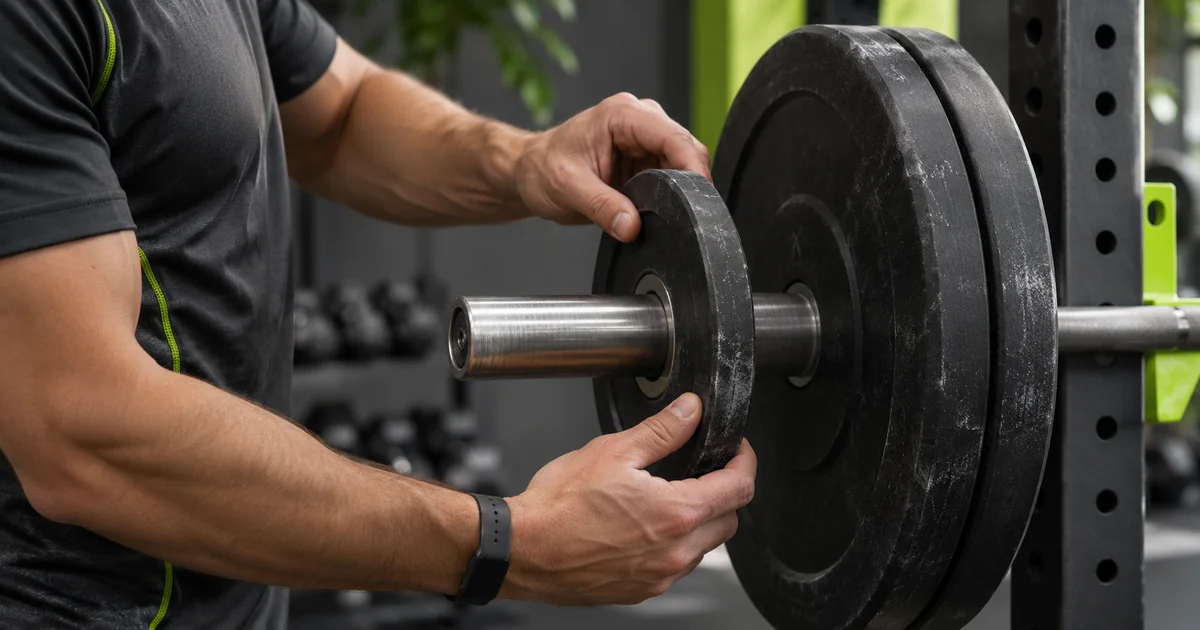
Four progression approaches, with rules you can use
Best for: a repeatable target
Linear progression
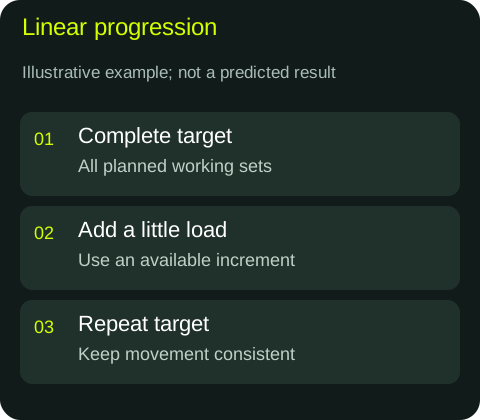
Keep the exercise, set count and repetition target stable, then increase the load after meeting your completion rule. It is a simple way to notice improvement because only one main variable changes. Linear progression describes the rule you attempt; it does not mean your strength will rise in a straight line forever.
- When to use this
- Use it when you can repeat the planned reps with a consistent range of motion and manageable effort across sessions.
- Your next step
- Choose a small available load increase only after completing the planned work. If technique or repetitions deteriorate, repeat the load rather than forcing the next increase.
- Put it into practice
- For illustration, a lifter completing three sets of five might repeat that target with the next small plate increment. The correct increment depends on the lift, equipment and program.
- Common mistake
- Adding weight because the calendar says so, even when the previous session missed the target.
- What to log next
- Record every working set, not only the best one. Review the exercise setup and rest intervals before calling one difficult session a plateau.
Best for: a defined rep range
Double progression
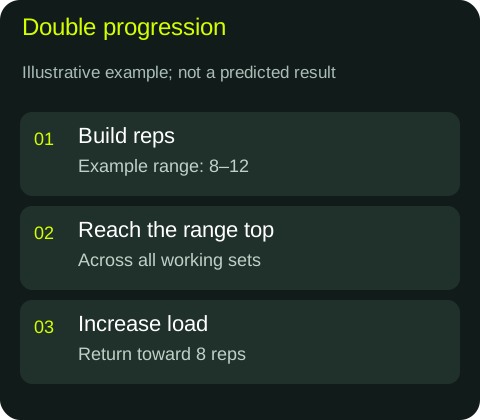
Progress repetitions within a range before increasing the load. When all planned sets meet the top of the range with the intended effort and technique, increase the weight and let reps return toward the lower end. This creates useful intermediate goals between large equipment jumps.
- When to use this
- Use it for movements where adding the next dumbbell or machine increment would otherwise push you below your intended repetition range.
- Your next step
- Write the range and your advancement rule in advance. An illustrative rule is three sets of 8–12, with a load increase after all three reach 12 at the intended effort.
- Put it into practice
- Compare a session of 10, 9 and 8 reps with the next attempt at the same load. Improving the later sets is progress even when the first set stays at 10.
- Common mistake
- Increasing the weight after only the first set reaches the top of the range, or shortening the movement to claim extra reps.
- What to log next
- Keep each set separate. A total-rep figure can conceal a strong first set followed by a large drop.
Best for: adjusting effort to the day
RPE-based autoregulation
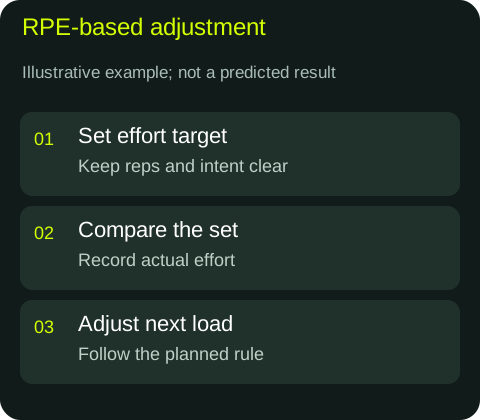
A repetitions-in-reserve RPE scale estimates how many more reps you could perform at the end of a set. It helps choose a load that matches the session’s effort target. As Eric Helms explains in the linked guide, autoregulation is an adjustment method within a program, not a complete program by itself.
- When to use this
- Use it when you have practiced estimating effort and want a structured way to respond to day-to-day performance changes.
- Your next step
- Keep the planned repetitions and effort target clear. Adjust the load if your first working set lands outside the intended effort range; do not add unplanned maximal sets to compensate.
- Put it into practice
- After a set, record your effort estimate before reviewing the video. Compare that estimate with rep speed and the next set, then refine it over time.
- Common mistake
- Treating a tired mood as an automatic reason to skip work, or pretending a very hard set had several reps left.
- What to log next
- Log the target and actual effort beside load and reps. The same load at a lower estimated effort can be useful context without proving a strength gain.
Best for: planned variation
Wave progression
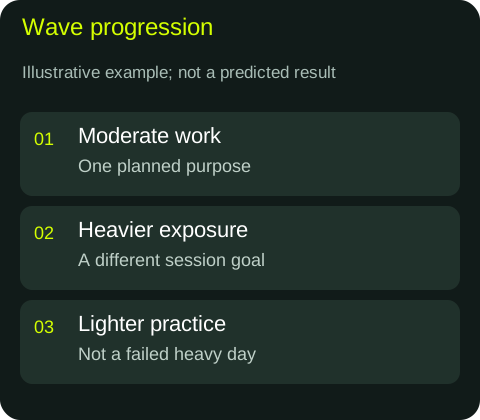
Arrange different loading or repetition demands across a repeating sequence of sessions or weeks. A lighter or higher-repetition exposure has a different job from a heavier one. The useful comparison is often the same point in successive waves, rather than every workout against the immediately previous workout.
- When to use this
- Use it when your program deliberately separates practice, volume and heavier work, or when repeating the same demanding session is hard to recover from.
- Your next step
- Write the purpose of each exposure and the rule for advancing the next wave. Follow the chosen program’s structure instead of changing intensity randomly.
- Put it into practice
- An illustrative sequence might move from a moderate session to a heavier session and then a lighter practice session. These labels describe intent, not a universal prescription.
- Common mistake
- Calling every unexpected change a wave, or treating a lighter planned session as a failed workout.
- What to log next
- Record the wave and session label. Compare heavier days with heavier days while checking whether the whole block is sustainable.
Set a progression rule before your next workout
- Choose one exercise and one rule
Start with a movement already in your plan. Decide whether the next change comes from load, reps, an effort target or a planned wave.
- Define a successful set
Specify repetitions, intended effort and a consistent movement standard. Separate completion of the prescribed work from simply moving the weight.
- Record the actual session
Log load and reps for each working set, then add a brief note if equipment, rest or technique changed.
- Choose the next action
Increase only when your rule is met. Otherwise repeat, reduce or review the plan according to its instructions; one hard day does not establish a plateau.
What to do when progress slows
Check the log before changing programs. Missed sessions, different equipment, shorter rest and changing range of motion can make an apparent stall difficult to interpret. Compare several genuinely similar exposures, then decide whether the progression increment or workload is too ambitious.
Technique practice and strength progression are related but separate. A better-looking rep at the same load can be a useful result. A higher app score alone is not a reason to add weight, and scores from different grading versions should not be treated as one continuous trend.
If the same targets remain out of reach, follow your program’s reset or lighter-week instructions, or get a qualified coach to review the workload. Pain is not a progression target: stop or modify painful movements and seek appropriate professional help for persistent symptoms.
Questions answered
Which progression model should a beginner choose?
Choose the simplest rule that fits the program and equipment. Linear load increases can work while targets remain repeatable; double progression gives intermediate rep goals when load jumps are large. A reliable log matters more than a complicated model.
Do I have to add weight every workout?
No. You can repeat a load, improve repetitions within a range or complete a planned lighter session. Add weight when your program’s advancement rule is met, rather than using each workout as a test.
Is RPE a progression model by itself?
No. RPE describes perceived effort and can help adjust load or workload. You still need a plan that specifies exercises, repetitions, effort targets and how training changes over time.
Can I use different progression rules for different exercises?
Yes. For example, a program can use one rule for main lifts and a rep-range rule for accessories. Write each rule down so you can tell whether you followed it.
Should I increase weight when my form score improves?
A form score is one piece of feedback. Check completed reps, effort, consistency and your plan’s rule before increasing the load. The score is not a clearance test or a prediction of what you can lift.
Sources and context
- Eric Helms: The Science of Autoregulation
- ACSM: Progression models in resistance training for healthy adults (2009)
- Gymscore planning, workout logging and progress features
Published by the team behind Gymscore. Our editorial methodology explains how we use sources and update our guides.