The Gymscore training library · Form
Squat Form Mistakes: A Complete Guide to More Consistent Reps
Choose what to review in your squat, practise one adjustment, and keep depth, load and control in the same conversation.
Squat review priorities: category results and detected faults are different measures
Compare the options below. Scroll the table sideways on smaller screens.
| Review focus | Measure reported | Observed frequency | Score difference vs baseline |
|---|---|---|---|
| Torso and posture | Lowest-scoring category | 50.3% | Not reported for forward lean |
| Knees moving inward | Detected knee-valgus fault | 6.3% | 18.8 points lower |
| Heels rising | Detected heel-rise fault | 2.2% | 10 points lower |
| Depth and range | Range as limiting category | 12.2% | 2.5 points lower when a depth issue appeared |
In the 10,000-analysis Gymscore study, published August 22, 2026, posture limited 50.3% of 2,041 squat analyses from 561 users. Score differences are observed associations, not injury-risk estimates. Sources and context ↓
Quick picks
- Torso changes sharply on the way up → review balance and load before forcing a more upright pose.
- Heels lift or balance shifts → test a controlled squat with a stance you can keep stable.
- Depth changes between reps → choose a repeatable target and film from the side.
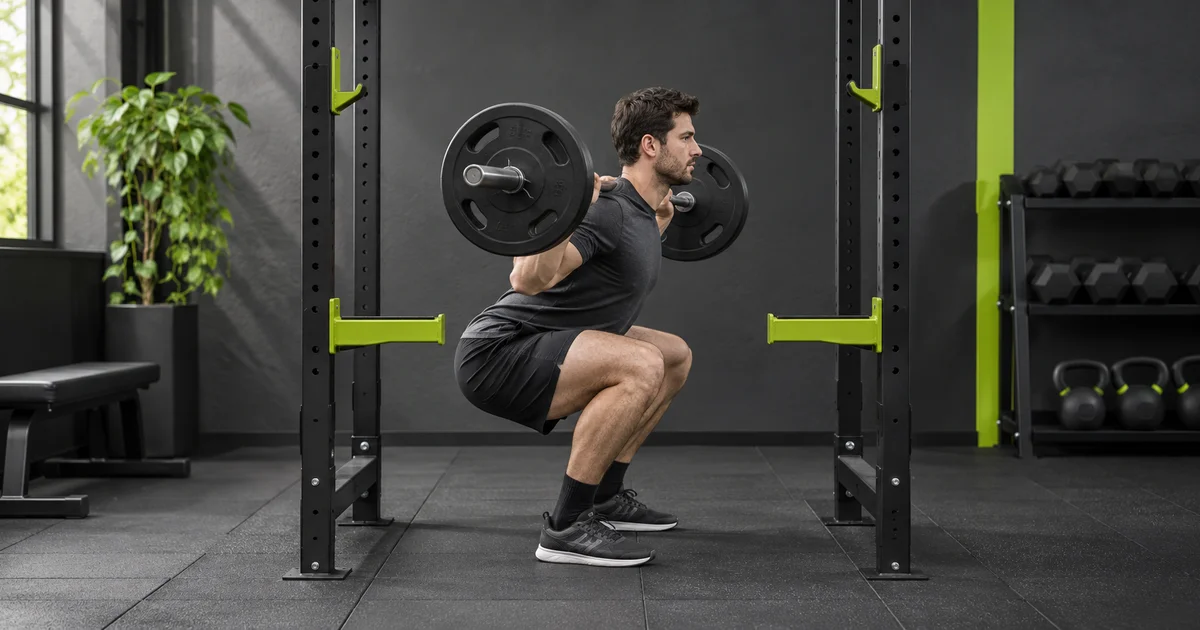
Four squat patterns and how to review them
Posture limited 50.3% of analyses
Losing a repeatable torso position
Some forward lean is normal, especially with a bar on your back. The useful question is whether your torso changes suddenly or the hips rise while the chest lags, rather than whether you look perfectly upright.
- When to use this
- Compare the ascent on the first and last repetitions and at warm-up versus working weight.
- Your next step
- Keep pressure through the whole foot and choose a load that lets the torso and hips move in a controlled sequence.
- Put it into practice
- Use a light squat with a brief pause at a comfortable depth, then stand without rushing the hips ahead.
- Common mistake
- Do not force an upright torso that your proportions or bar position do not support.
- What to log next
- Log the variation, load and where the torso changes; compare like-for-like sets.
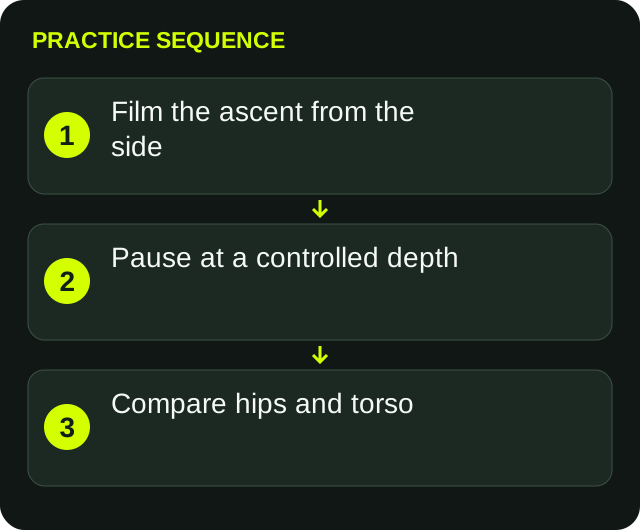
Observed score difference: −18.8 points
Knees moving inward unexpectedly
The study detected knee valgus in 6.3% of squat analyses. Look for a change you cannot control, particularly under fatigue, instead of treating every small knee movement as proof of a problem.
- When to use this
- Use a front-quarter view as a second angle if the side recording does not show knee tracking clearly.
- Your next step
- Choose a comfortable stance and aim for your knees to travel in a direction consistent with your feet.
- Put it into practice
- Practise a slow bodyweight or light goblet squat, keeping the feet planted and the movement deliberate.
- Common mistake
- Avoid aggressively forcing the knees outward or changing several stance variables at once.
- What to log next
- Record the stance and load, then note whether the unexpected movement appears throughout or only near the end.
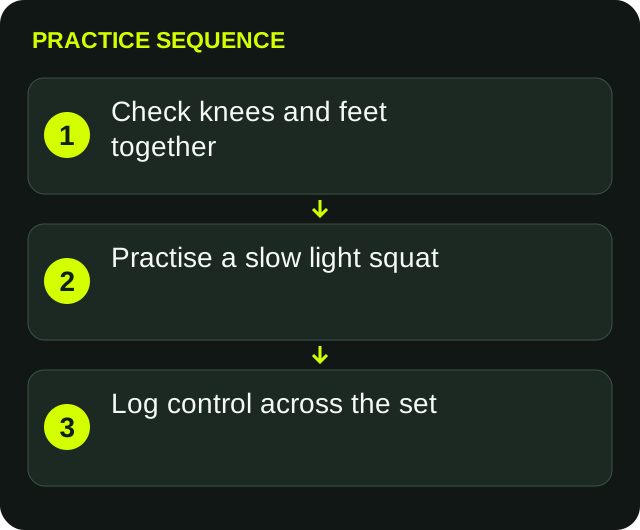
Observed score difference: −10 points
Heels lifting as you descend
Heels rising appeared in 2.2% of the study’s squat analyses. On video, look for an actual loss of contact rather than guessing from a shoe’s shape or from a camera angle that hides the foot.
- When to use this
- Review this if your balance moves toward your toes or you need to step to recover after a rep.
- Your next step
- Keep the whole foot supported and find a stance and depth you can control.
- Put it into practice
- Try a slow light squat with the same shoes and stance. Change one setup detail at a time and record what helps.
- Common mistake
- Do not chase extra depth by losing your balance, or treat a lifting shoe as proof that every setup issue is solved.
- What to log next
- Note footwear, stance and depth alongside load so you can tell what changed.
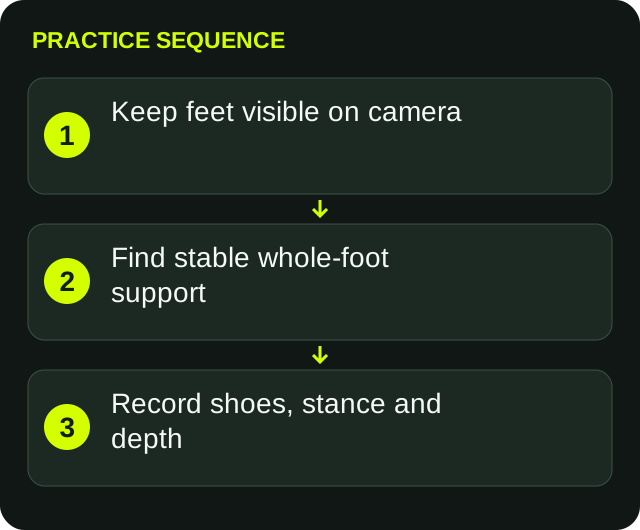
Range limited 12.2% of analyses
Changing depth without a clear target
The source mentions depth in many reviews, but range of motion was the limiting category in 12.2% of squats. Depth still matters: choose it for your goal and compare reps against a consistent target.
- When to use this
- Review shortened later reps, an uncontrolled drop at the bottom, or uncertainty about a competition depth requirement.
- Your next step
- Choose a comfortable, controlled target that fits your training objective, then maintain it as effort rises.
- Put it into practice
- Film a light paused squat from the side. Use the same camera height and position when comparing subsequent sets.
- Common mistake
- Do not shorten the movement just to add weight while calling it the same performance.
- What to log next
- Record depth or the variation used, not just kilograms and repetitions.
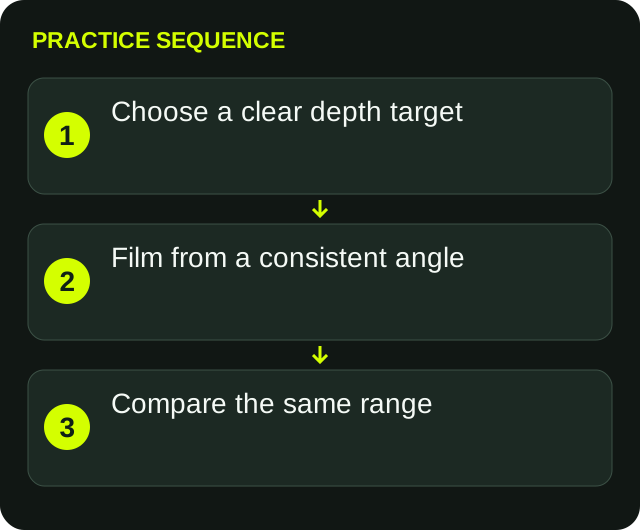
How to check your squat before the next progression
- Choose the variation and goal
Record whether you are using a back, front or goblet squat and what depth you are aiming for. Comparisons work best when the exercise stays the same.
- Film a complete set
Keep feet, hips, torso and the load visible from the side. Add a front-quarter recording on a separate set if you need to review knee tracking.
- Select one observation
Compare the first and last rep. Choose posture, knee movement, foot contact or depth as the focus rather than trying to change everything.
- Practise and log the result
Use a manageable load for the selected adjustment. Record the cue, repetitions, effort and whether the movement became more repeatable.
Connect squat practice to your plan
Keep a small amount of deliberate practice inside a plan you can repeat. A more complicated program will not resolve an unclear target: first decide which variation, depth and effort level you are tracking.
If the target becomes inconsistent near the end of a set, the next decision may be fewer repetitions, more rest or a smaller load increase. Record that decision so the following session tests the same idea. Do not let a new variation’s score masquerade as progress on the old one.
A single low score is not a medical finding. Stop or modify painful movement, and seek qualified advice for persistent or worsening pain. A coach can help interpret a pattern that remains confusing across several recordings.
Questions answered
Is leaning forward in a squat always a mistake?
No. Torso angle depends on proportions, bar position and variation. Review a sudden or uncontrolled change during the rep rather than trying to match one upright silhouette.
Does the chart mean depth is unimportant?
No. It shows that range was less often the weakest category than posture in this sample. Your chosen depth still needs to match your goal and remain consistent when comparing performance.
Do I need to push my knees out as far as possible?
No. Aim for controlled knee movement that fits your stance. Forcing an extreme position is not the goal, and one camera angle may not show the full movement.
Would a goblet squat be a useful practice option?
It can make a controlled squat easier to rehearse for some lifters. Choose it for the task, equipment and load you need, rather than assuming its higher group average score guarantees better results.
How can I tell whether I am ready to add weight?
Check whether you can repeat the planned reps, depth and movement at the intended effort. Then follow your program’s progression rule. If a larger jump changes the movement, use a more manageable step.
Sources and context
The chart separates a category being the weakest part of a rep from a detected fault; these percentages should not be added together. Score differences are associations, not injury estimates or promised improvements. The study does not establish a collection date range.
Published by the team behind Gymscore. Our editorial methodology explains how we use sources and update our guides.