The Gymscore training library · Form
Deadlift Form Mistakes: A Complete Guide to Better Pulls
Identify what changes during your pull, choose one adjustment, and check whether it holds from the first rep to the last.
Deadlift mistakes: observed frequency, score association and first adjustment
Compare the options below. Scroll the table sideways on smaller screens.
| Mistake to review | Frequency in the study | Score difference vs baseline | First adjustment |
|---|---|---|---|
| Hips rise before the bar | 20.4% of deadlift analyses | 11.4 points lower | Review starting hip height |
| Lower-back rounding | 15.1% of deadlift analyses | 17 points lower | Rehearse a consistent trunk position |
| Bar drifts forward | Not reported | Not reported | Keep the bar close |
| Jerking the bar | Not reported | Not reported | Build tension before lifting |
| Leaning back at lockout | Not reported | Not reported | Finish standing tall |
In the 10,000-analysis Gymscore study, published August 22, 2026, posture was the limiting category in 67.1% of 1,339 deadlift analyses from 440 users. Score differences are observed associations, not injury-risk estimates. Sources and context ↓
Quick picks
- Hips move before the plates → review the setup before adding more pulling effort.
- Bar swings away → practise a close, controlled path with a lighter load.
- Warm-ups look steady but later reps change → review load, rest and set length.
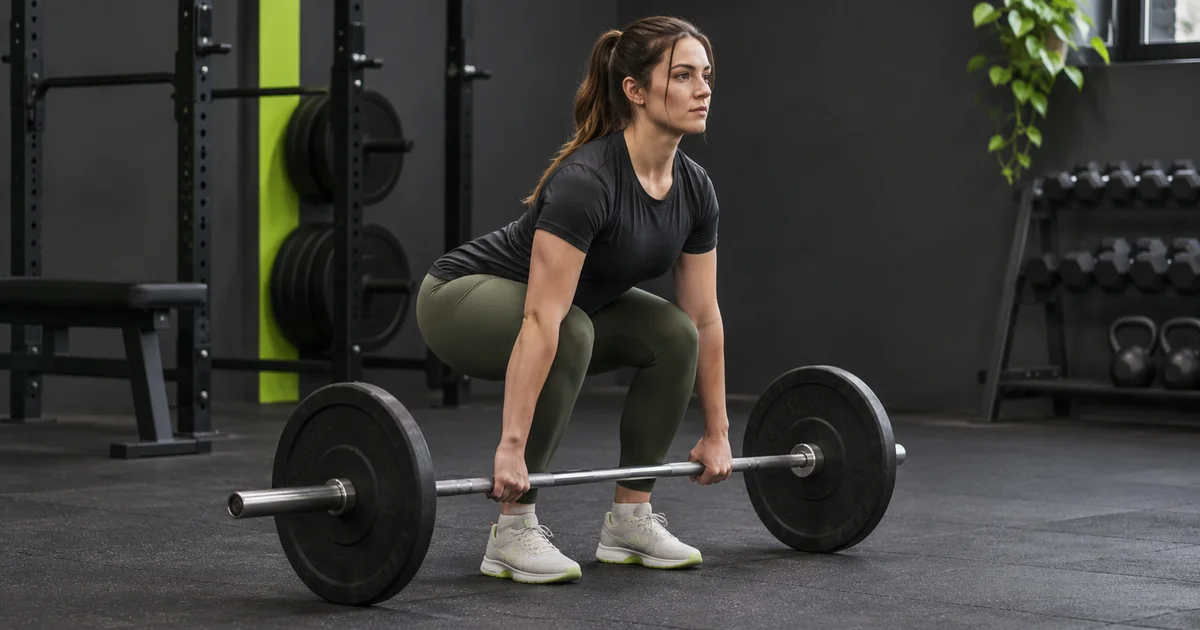
Five deadlift mistakes to review on video
Observed score difference: −11.4 points
Hips rising before the bar
Your hips move up while the plates stay on the floor, leaving your torso more horizontal when the lift begins. A start position with the hips too low is one possible explanation; fatigue can also change the sequence.
- When to use this
- Review the first moment of the pull, especially when a heavier set looks different from the warm-up.
- Your next step
- Set the bar over midfoot and find a hip position you can hold as you take tension through the bar.
- Put it into practice
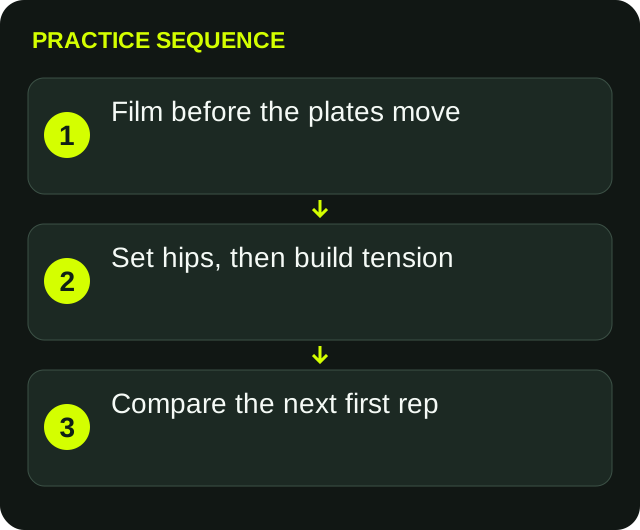
- Use a light load for deliberate setup repetitions. Pause after taking tension, then begin the pull without a second hip adjustment.
- Common mistake
- Do not force your chest upright by sinking your hips into a squat-like starting position.
- What to log next
- Record load and whether the hips move before the plates. Compare sets filmed from the same side angle.
Observed score difference: −17 points
Lower-back rounding during the pull
The study detected lumbar rounding in 15.1% of deadlift analyses. A video is useful for noticing changes in your position, but a rounded appearance alone cannot establish pain, injury or the cause of a missed lift.
- When to use this
- Review a clear change between your braced setup and the moment the bar moves.
- Your next step
- Reduce the load enough to practise a deliberate hinge and a trunk position you can maintain.
- Put it into practice
- Rehearse the hinge without a loaded bar, then film a light set with the same setup and controlled start.
- Common mistake
- Do not repeatedly add weight while relying on a score alone to tell you whether a rep is appropriate.
- What to log next
- Note whether position changes early or only as the set continues; this separates a setup question from a fatigue pattern.
Study frequency: not reported
Letting the bar drift away
The bar moves away from your legs as it leaves the floor or passes your knees. This changes the relationship between the load and your body and can make the pull harder to repeat.
- When to use this
- Use the side view when the bar seems to swing forward or your balance shifts toward your toes.
- Your next step
- Keep the bar close and use gentle lat tension before beginning the pull.
- Put it into practice
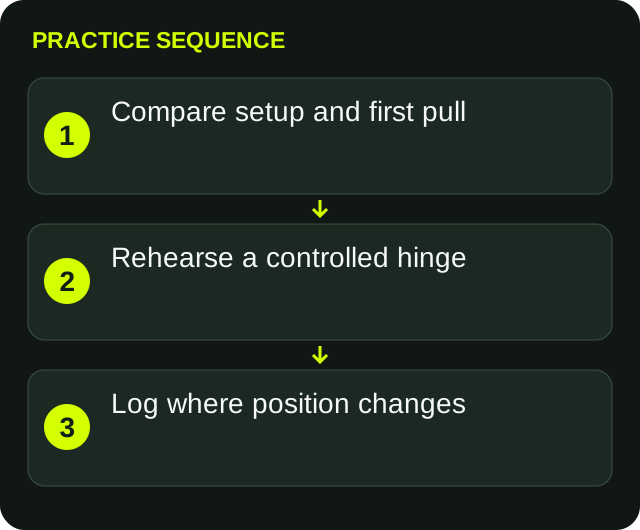
- Try a light, slow pull from floor to knee, watching whether the bar stays close without being steered around the knees.
- Common mistake
- Dragging the bar forcefully into your shins is not the goal. A close path should still allow a smooth lift.
- What to log next
- Keep the same camera location and compare the bar path rather than changing your stance after every rep.
Study frequency: not reported
Jerking the bar before building tension
A sudden yank takes up the slack at the same time as the lift starts. You may see the body change position abruptly before the plates leave the floor.
- When to use this
- Check this when the start feels disconnected or the first rep differs from subsequent reps.
- Your next step
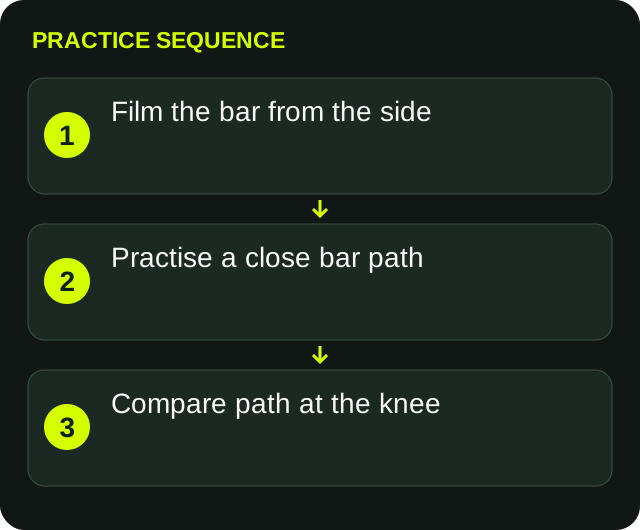
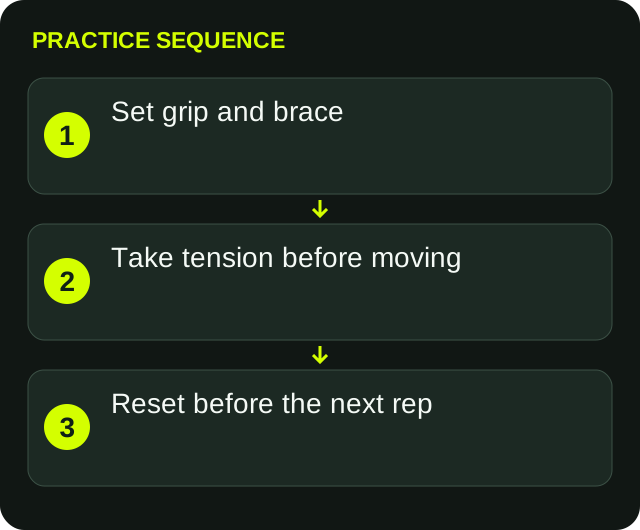
- Grip the bar, establish your brace and build pulling tension before pushing through the floor.
- Put it into practice
- With a light load, pause in the tensioned setup before each repetition and reset between reps.
- Common mistake
- Do not confuse an explosive intention with an uncontrolled setup. The sequence matters more than a dramatic start.
- What to log next
- Log whether a deliberate start makes the first rep easier to reproduce at the same weight.
Study frequency: not reported
Leaning back beyond standing tall
After the hips and knees extend, the lifter adds a backward lean. Finishing the deadlift does not require turning the top into a separate backbend.
- When to use this
- Review the last part of the rep if you feel you need an exaggerated finish to count it.
- Your next step
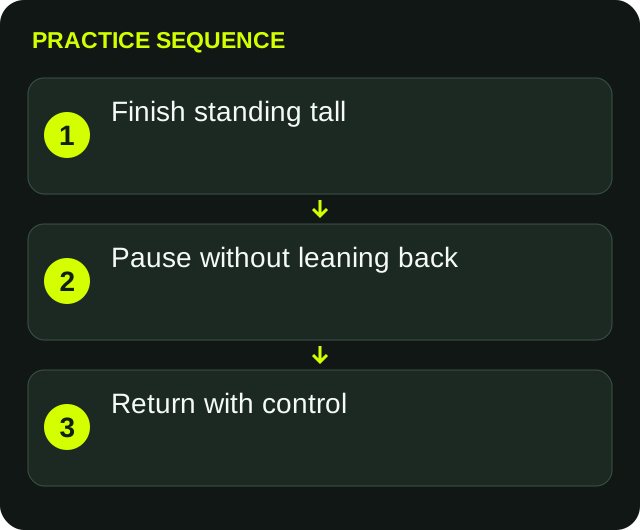
- Stand tall at lockout, then begin the return without adding a backward lean.
- Put it into practice
- Practise light repetitions with a brief controlled finish while keeping the bar close to your body.
- Common mistake
- Do not chase an exaggerated chest-up pose after the lifting portion is complete.
- What to log next
- Record whether the final position stays consistent as effort increases, alongside your planned reps and load.
How to review one deadlift set
- Choose a repeatable set
Use a manageable load and leave room to concentrate on the movement. Record the exercise variation, load and planned repetitions.
- Set the camera
Film from the side with the full body and both ends of the bar visible. Keep the setup and the complete set in the recording.
- Compare three moments
Review the setup, the instant the plates leave the floor and the lockout. Then compare the first and last repetitions.
- Try one adjustment
Choose one cue from the relevant section. Repeat with a suitable load and note whether the specific pattern changed.
Turn the form check into a training decision
A useful review ends with a decision for the next session. Log your load, repetitions, effort, rest and the cue you tried. If the pattern appears only late in a set, adjust the set length or rest before assuming that the entire technique needs rebuilding.
Use a workout plan with a progression rule you understand. Add load when the planned work is repeatable, rather than because one filmed set received a higher score. Compare scores only under comparable conditions and grading versions; the study does not establish a rate at which your own scores should improve.
Stop or adjust a painful movement. Persistent or worsening pain deserves assessment from a qualified health professional; a form video and this chart cannot diagnose it.
Questions answered
What is the most common deadlift form problem in the study?
Postural alignment was the limiting category in 67.1% of 1,339 deadlift analyses. That is a category-level result, not the prevalence of one specific fault. Hips rising early was detected in 20.4%.
Should my hips and shoulders rise at exactly the same speed?
Use their relationship as a practical observation rather than a rigid angle rule. A marked hip rise before the bar leaves the floor is worth reviewing, but body proportions and deadlift variation affect the movement.
Does rounding mean I will injure my back?
The study measured app scores, not injury outcomes. Neither a lower score nor a single video can diagnose an injury or predict that a particular rep will cause one.
Should I switch to a trap bar?
It can be a useful alternative when it fits your equipment, goal and movement preferences. Higher average scores in the study do not prove that changing bars will improve your own score or outcome.
When should I increase the weight again?
Follow your plan and look for repeatable completion of the prescribed work at the intended effort. If the pattern returns at heavier loads, keep practising at a manageable load and review the progression rule.
Sources and context
Fault percentages in the chart refer to analyses, not unique people. Score gaps are associations against the exercise baseline, not injury severity or guaranteed gains from a fix; repeated submissions are not independent participants. The study does not establish a collection date range.
- Gymscore study of 10,000 form analyses — published August 22, 2026
- Mia Inman — Hips Rising Early in the Deadlift
Published by the team behind Gymscore. Our editorial methodology explains how we use sources and update our guides.